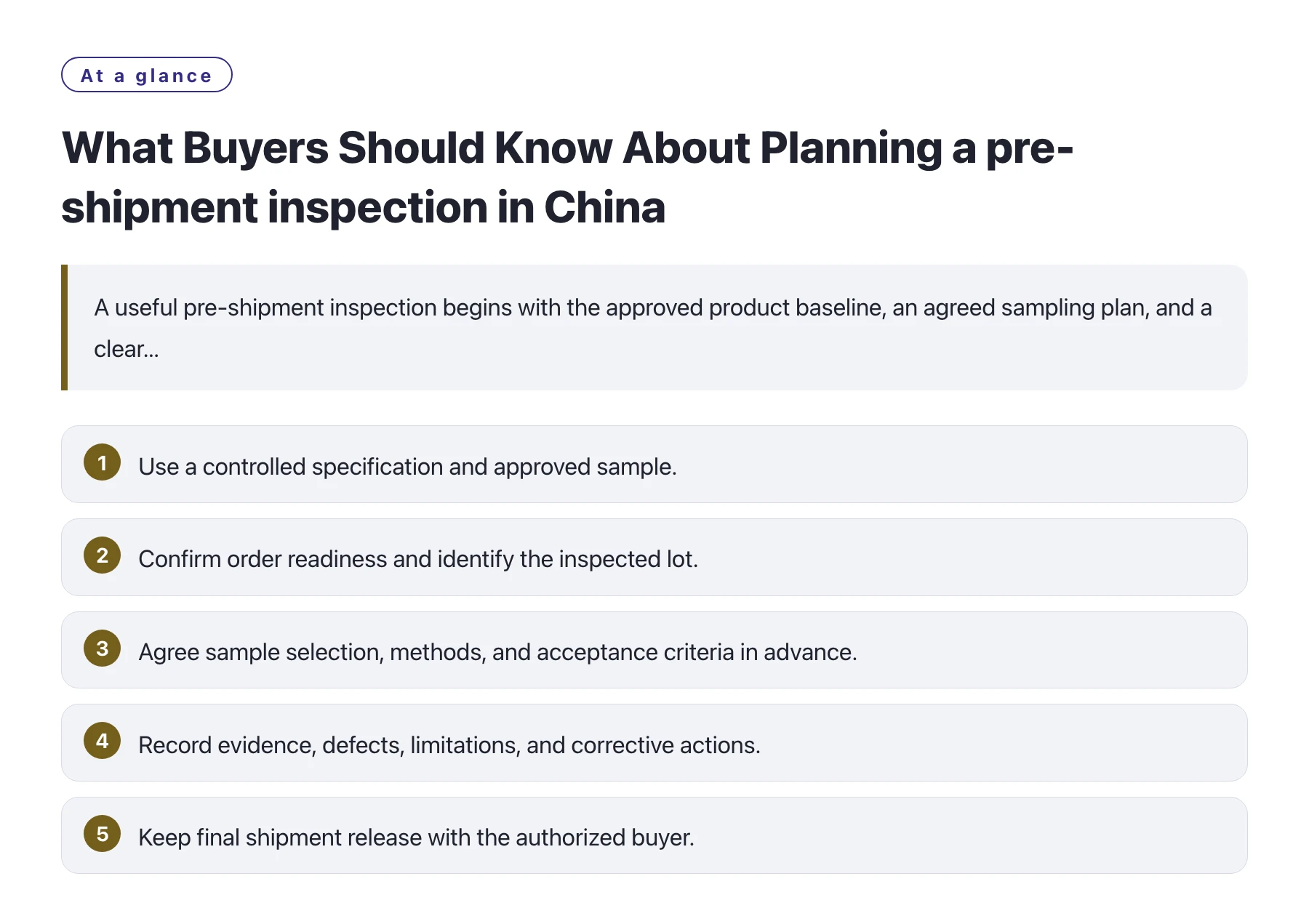
A useful pre-shipment inspection begins with the approved product baseline, an agreed sampling plan, and a clear decision route for findings. These controls help the buyer understand what was examined and what the report can support before a shipment is released.
Key takeaways
- Use a controlled specification and approved sample.
- Confirm order readiness and identify the inspected lot.
- Agree sample selection, methods, and acceptance criteria in advance.
- Record evidence, defects, limitations, and corrective actions.
- Keep final shipment release with the authorized buyer.
Inspection is one evidence point in a larger quality and shipping process. Clear instructions make its coverage, limitations, and follow-up actions easier to use.
1. Tie the inspection to an approved baseline
A pre-shipment inspection is useful only when the inspector can compare the finished goods with a controlled requirement. Gather the purchase order, approved specification, drawings, packaging artwork, sample approvals, and any written changes. Identify the exact revision and keep obsolete files out of the inspection pack. If the order contains variants, list the model, size, color, material, or other distinction for each one.
Convert expectations into observable criteria. Replace words such as “good finish” with defined defects or measurable limits wherever possible. Identify which requirements are critical to safety or function, which are major commercial issues, and which are cosmetic preferences. The buyer or qualified technical owner should approve these definitions before the inspector arrives.
2. Confirm the order is ready to inspect
Set the inspection date against the production and shipment schedule. Confirm the required quantity is finished, packed or available for examination, and identifiable by lot or batch. If production is incomplete, decide whether a partial check is useful and document the portion it can represent; do not present a partial result as full-order release.
Ask the factory to confirm location, access, responsible contact, working conditions, and whether goods from different production lots are mixed. Identify products that are reworked, held, or not yet through final assembly. Record the actual quantity and status on arrival so the report states what was and was not covered.
3. Agree the sampling method and limits
Write down the lot definition, sample selection method, inspection level if applicable, sample size, acceptance criteria, and treatment of defects before the visit. ISO 2859-1 describes sampling procedures indexed by acceptance quality limit for inspection by attributes; it does not set a universal quality promise for a particular product or replace buyer-supplier agreement. Select the applicable plan with a qualified quality owner and state it in the inspection instructions. [1]
For small, high-risk, or highly customized orders, a buyer may need additional checks beyond a routine sample plan. Decide whether critical features require 100 percent examination, a functional test, or independent laboratory evidence. The sampling plan and test method should be chosen for the product and contract rather than copied from another order without review.
4. Prepare a balanced checklist
Organize checks by identity and quantity, workmanship, dimensions, function, safety-related features, accessories, labels, and packaging. For each line, list the requirement, method, sample size or coverage, acceptable limit, evidence to record, and defect class. Include tools or fixtures needed and confirm their calibration or suitability where measurements matter.
Use photographs and diagrams to clarify inspection points, but do not rely on photos to define a tolerance. Note what conditions affect a test, such as power supply, ambient environment, product configuration, or test duration. If a characteristic cannot be checked at the factory, identify the alternative evidence and the person who will review it.
5. Define carton and packaging checks
Specify carton markings, model and quantity, barcodes, manuals, language, protective materials, pallet configuration, and any buyer-approved artwork. Check that the sample includes representative packaging rather than a temporary mock-up. List carton dimensions, gross weight, or handling symbols when these affect freight, storage, or downstream receiving.
Review packing against the purchase order and shipping instructions. Determine who confirms mixed-carton rules, labels, pallet marks, and container loading. The inspector can record observed packaging conditions, while the buyer or logistics owner remains responsible for the final shipping instruction and destination-specific requirements.
6. Plan functional tests and evidence
Choose tests that demonstrate actual requirements, not only that the product switches on. For equipment, define operating conditions, cycle count, expected output, alarms, interface checks, and sample preparation. For consumer products, state the practical operation, fit, finish, or assembly checks needed for the order. Keep tests safe and avoid destructive work unless the buyer has approved it.
For each test, capture the method, instrument, units, result, pass limit, and product identity. Preserve original photos, readings, and test records with the report. If a test fails or cannot be performed, show the limitation plainly instead of substituting a verbal assurance from the factory.
7. Clarify roles and factory coordination
Name who selects the sample, who witnesses the inspection, who may answer technical questions, and who can authorize a deviation. The factory should provide access and relevant documentation but should not choose only the best-looking units for the inspector. The buyer should avoid asking an inspector to approve a commercial compromise without an authorized decision maker.
Agree how translation, photography, privacy, and safety requirements will be handled. Make a contact list with escalation options if the goods are not ready, access is denied, or the factory requests a scope change. Ask the inspection company to disclose any relationship that could affect independence and to report constraints that limit the findings.
8. Decide what happens after a failure
Define in advance what a pass, fail, pending, or incomplete result means for shipment release. State who receives the report, how quickly, and who has authority to accept rework or a concession. Keep a failed finding open until corrective evidence is reviewed; a promise to fix it later is not the same as a completed correction.
If reinspection is needed, specify whether it covers the affected sample, the full lot, or a defined new production run. Record changes to quantity, sorting, repair, replacement, or packaging and maintain the original findings. Link the next inspection to the same revision-controlled criteria unless the buyer formally approves a change.
9. Separate inspection from broader assurance
A pre-shipment visit is a time-bound sample-based observation. It does not automatically establish regulatory compliance, long-term durability, hidden material composition, or performance of every unit. Buyers should match additional audits, laboratory testing, document review, or destination checks to product risk and contractual requirements.
A clear report includes order identity, date and location, quantity status, sampling plan, criteria, results, deviations, photographs, limitations, and inspector identity. Review whether conclusions follow from recorded evidence. If a report says “pass” but omits the agreed critical check, request clarification before relying on the summary.
10. Make the release decision traceable
Before shipment, compare the inspection outcome with open production issues, approved deviations, packing evidence, and contractual release conditions. Record the person who makes the decision and the date. If shipment is conditional, specify the condition, evidence required, responsible party, and deadline. This creates a usable handoff for the freight and receiving teams.
Buyers arranging finished-goods inspection before shipment should provide the inspector with the approved baseline, agreed sampling instructions, and a clear escalation contact. Treat the report as evidence for a release decision—not as a substitute for the buyer’s own acceptance responsibilities or any separate legal assessment.
Sources
Frequently asked questions
When should a pre-shipment inspection be scheduled?
Schedule it after the defined goods are complete and available, but early enough to resolve findings before the planned shipment date.
Does a passed sample mean every unit is defect-free?
No. A sample-based inspection describes the examined units and agreed plan; it cannot establish the condition of every unit or hidden attributes.
Who chooses the sampling plan?
The buyer and supplier should agree the plan and acceptance criteria before inspection, with a qualified quality owner selecting a suitable method.
Can the inspector approve a shipment after a failed result?
Only if the buyer has explicitly delegated that authority. Otherwise the report supports a decision by the named buyer representative.